
Starting Brazilian Jiu Jitsu in Your 40s or 50s
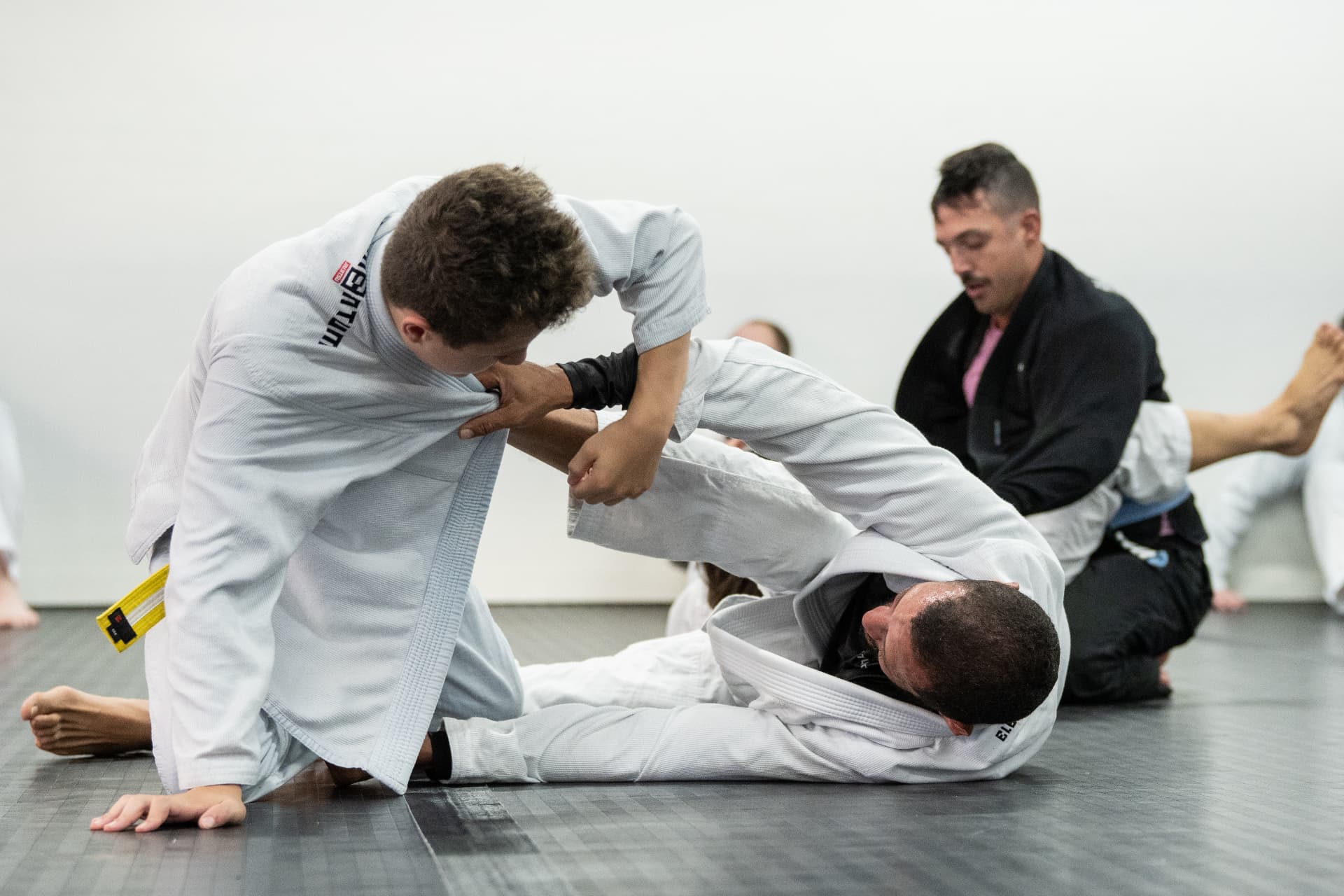
The hard part of starting Jiu Jitsu at 45 is often walking through the door. You may be interested in learning something new but unsure how your knees, schedule, or recovery will handle a contact sport.
Those are sensible questions. The first few weeks should help you understand the training, not prove that you can keep up with someone who has been practicing for years.
Start where you are, not where you used to be
Maybe you played sports in college. Maybe you have not exercised consistently in a while. Either way, the body you are bringing to class today is the one your training should respect.
Tell your instructor about your experience level and any limitations that affect movement. If you have an injury or medical concern, get advice from a qualified healthcare professional before starting. A good training environment makes room for honest conversations about intensity and rest.
What a first class should teach you
Beginners benefit from learning how to move on the mat, protect themselves during controlled practice, and communicate with a partner. Complex sparring exchanges are not necessary to understand the basics.
At Elementum in Winter Park, an adult's first visit is a private introduction. The academy describes it as a guided session before joining a regular class. That format can give a new student space to ask questions about the movements and the pace.
Learn to tap early and without embarrassment
Tapping means telling your training partner to stop. It is a normal part of practice, not a scorecard. Beginners should understand how and when to tap before any resistant training begins.
A good partner also pays attention to verbal requests and body language. If you feel unsure about a technique, ask to slow down. Respect for boundaries is an essential part of training responsibly.
Choose consistency over a dramatic first month
It can be tempting to fill every available slot on the schedule. That is rarely necessary to learn. A routine you can repeat for months is more useful than a busy first week followed by two weeks of soreness.
Pick class times that fit your work and family responsibilities. Build up gradually and treat recovery as part of the plan. Sleep, food, and time between hard sessions affect how prepared you feel when you return.
Elementum publishes adult training options throughout the week, including morning and midday sessions. Ask which current classes are appropriate for a new student before setting a schedule.
You do not need to become a competitor
Many adults train for the challenge of learning, the exercise, or the routine of being part of a class. Competition can be meaningful for students who want it, but it is not a requirement for progress.
The most useful measure in the beginning is whether you understand a little more than you did last week. Remembering a position, asking a better question, or recognizing when to pause all count as learning.
What to ask before signing up
Ask how beginners are introduced, what uniform is needed, and what happens after the first session. Clarify membership terms and the available class times. If you have never trained before, ask how partners are assigned and whether the instructor helps new students adjust their intensity.
At Elementum Jiu Jitsu, the first adult introduction takes place at 1154 Solana Avenue in Winter Park. Comfortable athletic clothing is enough for that initial visit. If you want to see how the training feels before making a decision, ask the team to arrange your introduction.